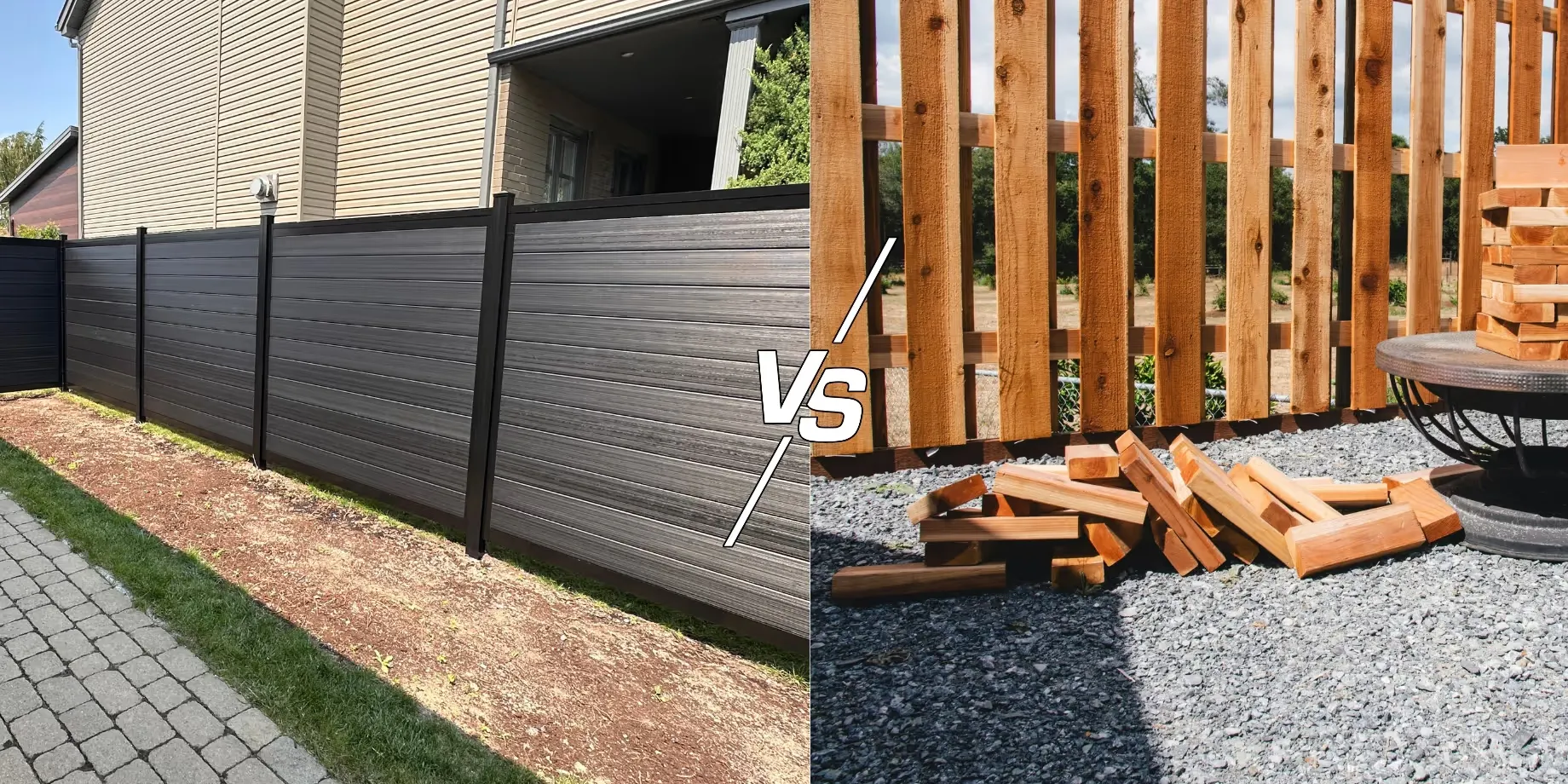
Wood is warm and natural. It's also cheaper upfront. But in Quebec, you have to live with:
- Stain or sealant every 2-3 years
- Warping and cracking caused by freeze-thaw cycles
- 10 to 15-year lifespan, with visible wear showing well before that
- Risk of splinters
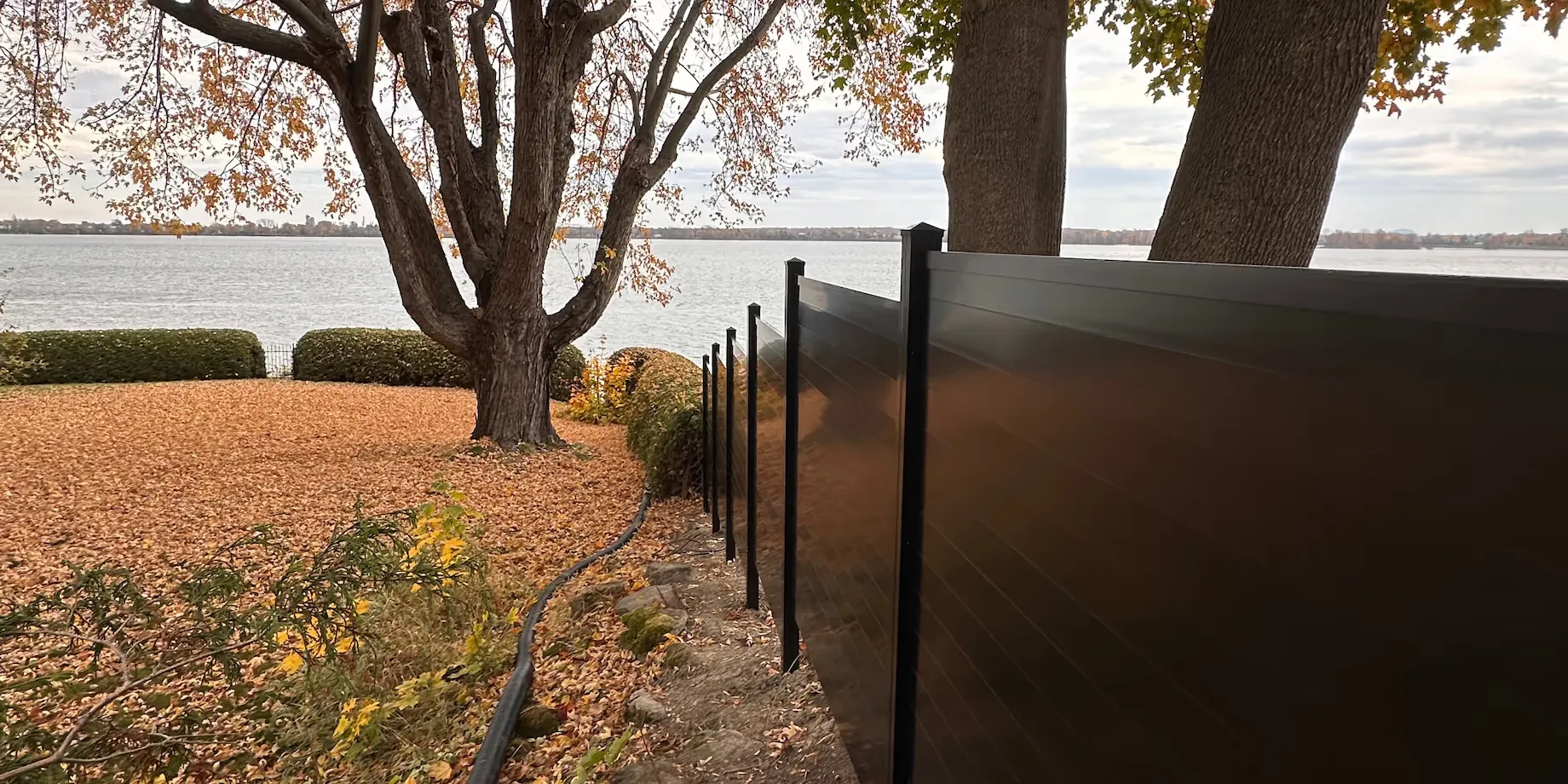
Composite gives you the look of wood without the maintenance:
- One soap wash per year, that's it
- Withstands Quebec winters without warping or cracking
- 25+ year lifespan
- No splinters, consistent appearance that holds up
The upfront cost is higher. That's the only downside.
To see available colours and profiles, check out our composite fence page.
Over 15 years, wood racks up the costs: about 5 stain applications, plus board replacements. Composite is a one-time, predictable investment. In the end, the initial price difference evens out.
Wood works for those who prioritize the upfront budget and like the rustic look — while accepting the regular maintenance.
Composite is for those who want peace of mind. No maintenance, no replacements, and a fence that will outlast the trends.