Before any excavation in Quebec, you need to contact Info-Excavation to locate underground infrastructure -- gas lines, electrical cables, telecom. It's the law, and we don't dig until it's done. Plan for at least 3 business days before work begins.
The location certificate, prepared by a land surveyor, confirms the exact boundaries of your property. It's the only way to be sure the fence will be installed in the right spot and avoid disputes with the neighbour.
Most municipalities require a permit to install a fence. Your city's urban planning department will specify permitted heights, accepted materials and setback distances.
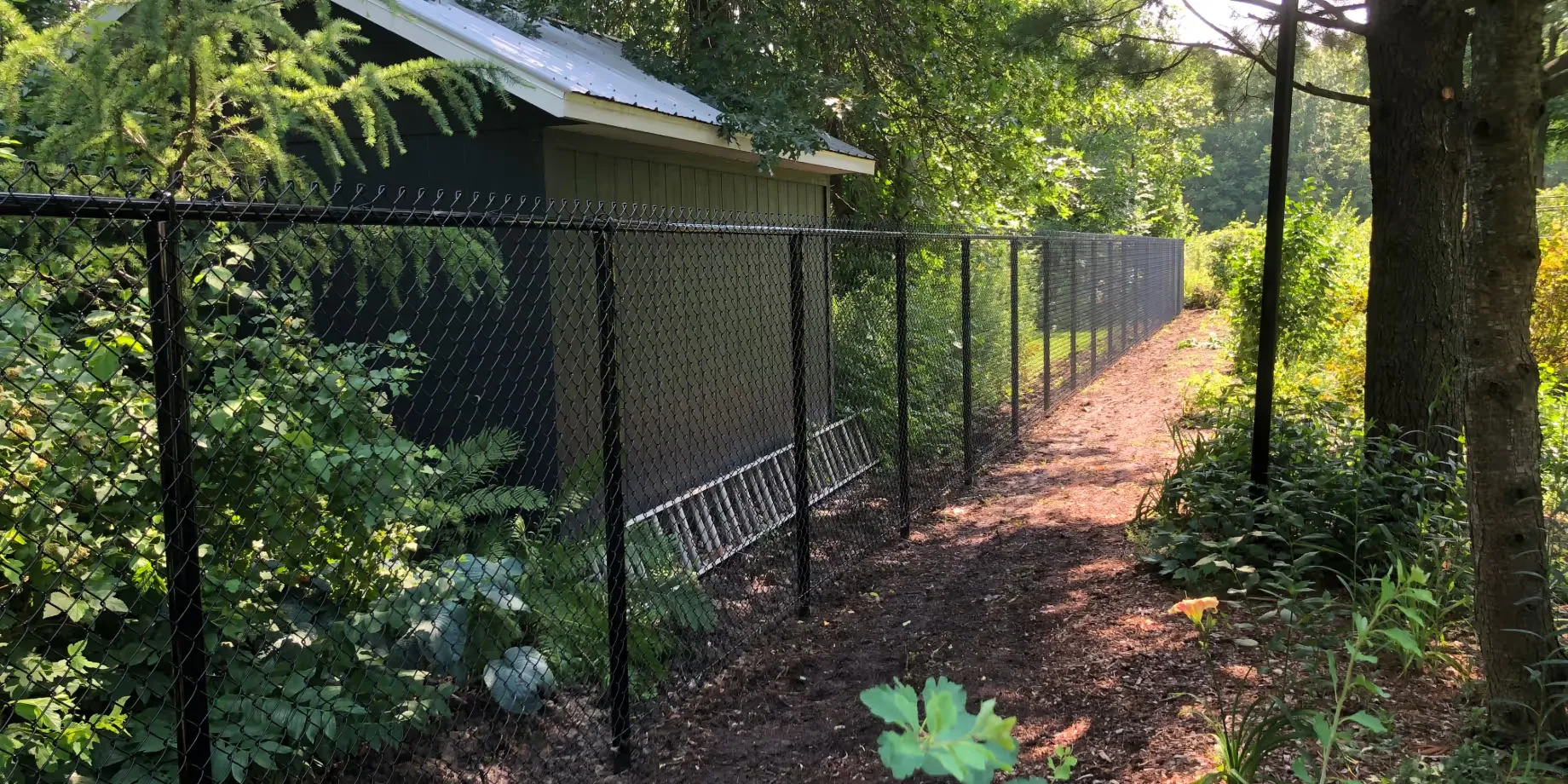
This is where your contribution makes a difference. Along the planned fence line:
Remove any old fence remnants.
Clear large rocks and stumps.
Cut low branches that hang into the zone.
Move patio furniture, toys and anything lying around.
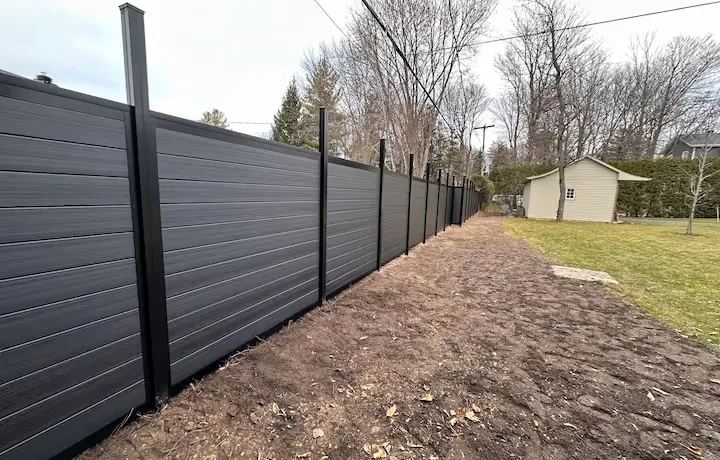
Our equipment needs a clearance of 42 inches minimum. Ideally, we work with 60 inches of total width.
We know how to work with slopes and uneven terrain -- that's what we do. Some light grading with fill can help even out the gap under the fence.
A quick word to the neighbours before work starts -- that's just common sense. It avoids surprises and gets things off on the right foot.
Spring and early summer is the ideal window. The ground is thawed, concrete conditions are optimal, and there's time to complete the installation before the backyard becomes the centre of family life. Those who plan early also avoid peak-season delays -- because in June and July, schedules fill up fast.